


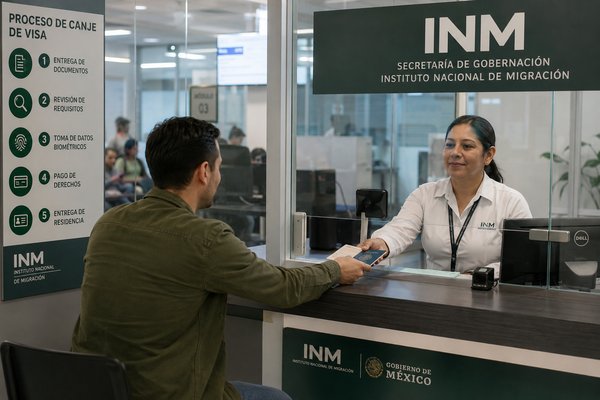
Mexican Residency: What Happens After You Get Your Visa?
Getting a Mexican residency visa can feel like reaching the finish line. It isn't.
The visa placed in your passport by a Mexican consulate abroad is usually the first stage of becoming a resident. After entering Mexico, you still need to complete the process with the Instituto Nacional de Migración (INM), obtain your residency card, and—if you are relocating with a family—decide how the other members will obtain their status.
These are some of the questions we hear most often from people moving to Mexico.
First: Is My Residency Visa in My Passport Already My Residency Card?
No. If a Mexican consulate approves your temporary or permanent residency application, it places a visa in your passport that allows you to enter Mexico for the purpose of completing the residency process. After entering Mexico, you must complete a procedure known as canje (exchange) with INM. The result is your physical Mexican residency card.
Think of the process as two stages:
Mexican consulate abroad → residency VISA
INM in Mexico → residency CARD
This distinction is particularly important when planning your first trip to Mexico after receiving the visa.
What Is Canje?
Canje literally means "exchange." In immigration terms, it is the process through which you exchange the residency visa in your passport and the immigration documentation issued upon entry (FMM) for your Mexican resident card. The procedure is completed with INM in Mexico.
For most new residents, canje involves submitting the application and supporting documentation, obtaining the appointment (which can take weeks, so careful with this), paying the applicable government fee, providing biometric information, and receiving the residency card.
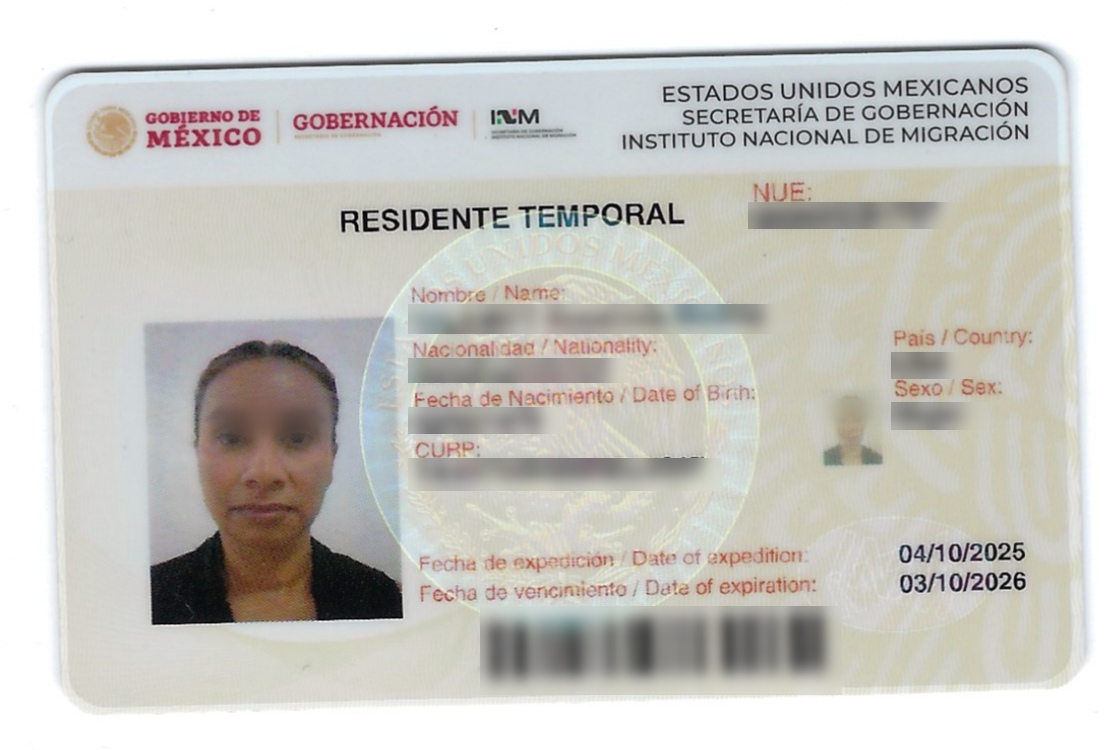
Once completed, the card (not the visa in your passport) becomes the document you normally use to demonstrate your legal resident status in Mexico.
How Long Do I Have to Complete the Canje?
This is one of the most important deadlines to remember: You have 180 calendar days after receiving the visa to enter Mexico. Also to consider: You have 30 calendar days after entering Mexico to initiate the canje process.
The 30-day clock does not start when the consulate issues your visa. It starts when you enter Mexico using that residency visa.
That means you do not necessarily have to move permanently as soon as the visa is issued. However, once you use it to enter Mexico for residency purposes, the 30-day period begins. Planning that first entry carefully can therefore make the process considerably easier.
Can I Leave Mexico Before Completing My Canje?
This is where advance planning becomes particularly important. A residency visa is intended to be exchanged for a resident card after entry. Until that process is completed, international travel can complicate matters.
If an urgent need to leave Mexico arises while your residency document is still being processed, INM has procedures that may allow travel authorization in certain circumstances. But as a practical relocation strategy, it is much easier to plan enough time in Mexico to complete the process before scheduling additional international travel.
Does Every Member of My Family Need to Qualify Through Financial Solvency?
Not necessarily. This is one of the most useful aspects of Mexico's immigration system for families.
Suppose one spouse comfortably meets the financial-solvency requirements for temporary residency, but qualifying every spouse and child independently would be considerably more difficult. Depending on the family's circumstances, one person may establish residency first and eligible relatives may subsequently obtain residency through family unity (vínculo familiar).
Mexican immigration rules recognize several qualifying family relationships, including spouses and certain children and parents, although the exact residence category and procedure depend on who the resident is and the relationship involved.
This can make family unity an important alternative to having every member qualify independently.
So Is Family Unity Always Better?
No. There are advantages to both strategies. Having each family member qualify independently can make sense when everyone easily satisfies the applicable requirements and the family wants to complete as much of the process as possible before arriving.
Family unity can be useful when one person clearly qualifies but the financial requirements become difficult or unnecessarily burdensome when multiplied across the family. There may also be differences in documentation, timing, consular procedures and the immigration status ultimately available to different relatives.
The better route therefore depends on the family's composition and circumstances rather than on a universal rule. This is an excellent question to resolve before submitting the first visa application, rather than after everyone has already started separate processes.
Can Family Unity Be Processed Inside Mexico?
In certain circumstances, yes. Current INM procedures allow eligible people already in Mexico under particular immigration conditions to request a change of status based on family ties. For example, a qualifying spouse of a Mexican citizen or of a temporary or permanent resident may be eligible to change immigration status in Mexico when the applicable requirements are satisfied. This is one reason family immigration should be planned as a single strategy rather than treating every family member's application as an unrelated procedure.
What Documents Should Families Prepare Before Moving?
Marriage and birth certificates become particularly important when using family unity. Foreign public documents will need to be apostilled or legalized, depending on the country that issued them, and documents in languages other than Spanish may also require translation (certified translation done in Mexico).
Obtaining these documents while still in your home country is often much easier than trying to arrange them after arriving in Mexico. A little preparation can prevent weeks of unnecessary delays.
What Happens After I Receive My Temporary Resident Card?
For most people, receiving the card makes daily life considerably easier. It provides formal proof of legal residence and is commonly needed or useful when completing other settling-in processes.
But temporary residency also comes with another important date to remember: expiration. Temporary residency can generally be maintained for a maximum of four years before the resident must either qualify for another immigration status or leave that category.
Renewals and eventual transition to permanent residency should therefore be considered part of the longer-term immigration plan.
Can I Travel Normally Once I Have My Residency Card?
Generally, yes. But there is one small procedural detail that new residents should understand. When entering and leaving Mexico, residents should identify themselves as residents, rather than allowing themselves to be documented as ordinary tourists. Keep your passport and residency card with you when traveling internationally and make sure your immigration status is correctly recognized. It is a simple habit that can prevent unnecessary complications.
The Bigger Picture: Immigration Is a Process, Not a Single Appointment
One of the most common mistakes we see is thinking only about the consular appointment.
A successful immigration plan actually has several stages: Choose the appropriate residency pathway → prepare documents → obtain the visa → enter Mexico correctly → complete the canje → obtain the residency card → handle family members → monitor renewals and future status.
None of these steps is particularly mysterious once you understand the sequence. The difficulty usually comes from discovering the next requirement only after it becomes urgent.
Planning Your Move to Mexico?
At Nexterra, we help international families understand how immigration fits into the broader relocation process: from planning the timing of your arrival and completing your canje in Querétaro to coordinating housing, schools and the practical steps that follow residency.
Because obtaining the visa is important. Knowing what happens next is what turns that visa into a successful move.